
 EN



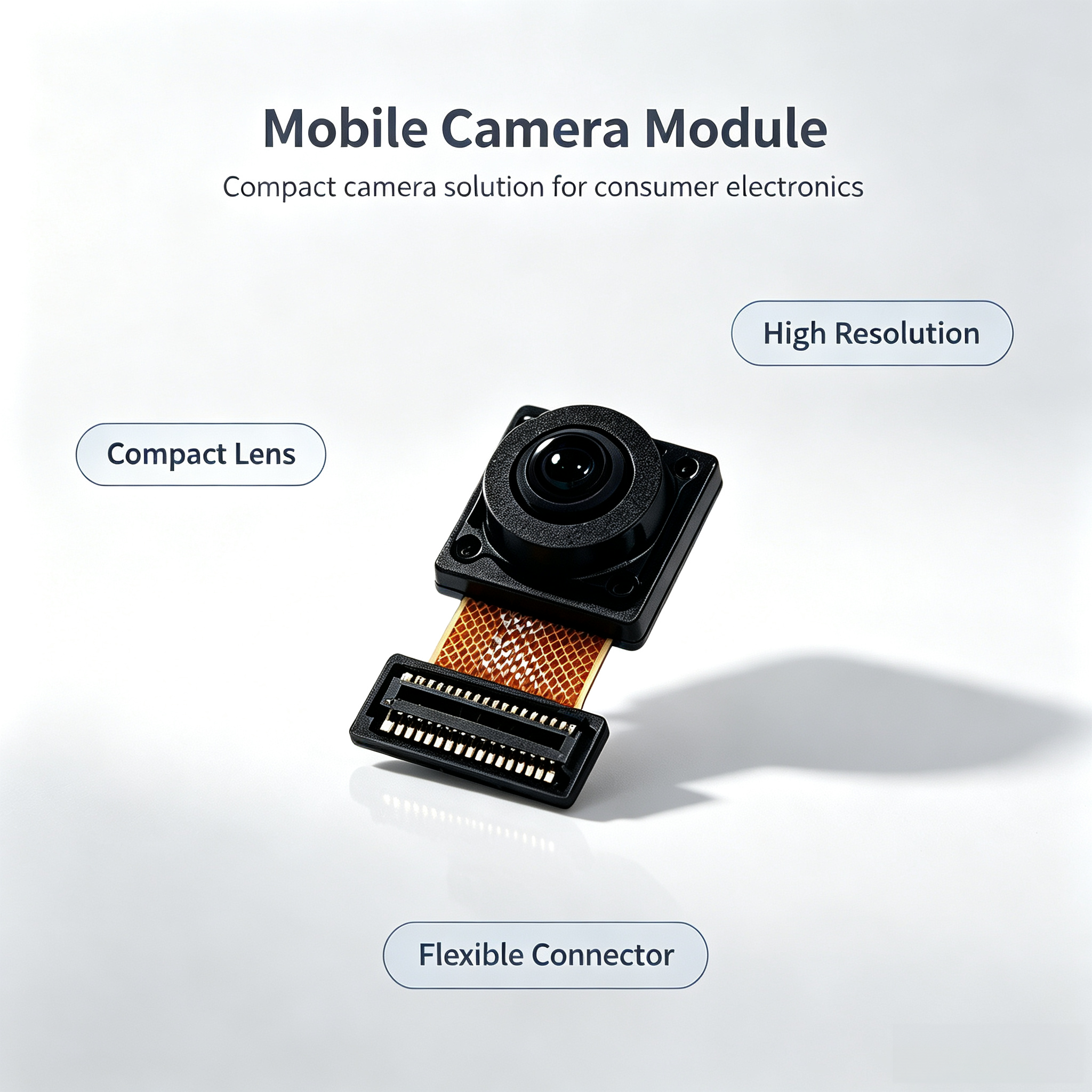
Battery life represents one of the most critical performance metrics for modern embedded vision systems, particularly when deploying low-power camera modules in remote monitoring, wearable devices, and IoT applications. The endurance of your low-power camera modules directly determines deployment feasibility, maintenance cycles, and total cost of ownership across distributed sensor networks. Understanding how different image sensors impact battery longevity allows engineers and product managers to make informed decisions about which low-power camera modules deliver optimal performance within power-constrained environments.

Low-power camera modules have evolved significantly, enabling reliable video capture and image processing on battery-operated platforms that previously relied on external power infrastructure. The sensor architecture, pixel technology, and signal processing pipeline within low-power camera modules fundamentally shape how much current the entire system draws during active operation and standby states. Different manufacturers implement varying sensor technologies, integration levels, and power management strategies, creating substantial variations in how long low-power camera modules can operate before requiring battery replacement or recharging.
Understanding Image Sensor Power Consumption Patterns
Sensor Architecture and Current Draw
The image sensor serves as the power consumption anchor within any low-power camera modules design. Modern CMOS sensors integrated into low-power camera modules consume current during several distinct phases: the row and column address decoders require continuous current to scan pixels, the output amplifiers deliver signals to analog-to-digital converters, and the timing control circuits orchestrate the entire pixel readout sequence. Rolling shutter sensors commonly found in low-power camera modules typically draw less current than global shutter variants because they scan pixels sequentially rather than capturing all pixels simultaneously, reducing peak power demand. Global shutter sensors, by contrast, generate higher instantaneous current spikes during the exposure window, impacting battery drain more severely even if average current appears comparable.
Pixel Size and Sensitivity Trade-offs
Pixel size directly influences how much light reaches each photodiode within low-power camera modules, affecting the exposure time and therefore the total integration period during which current flows. Larger pixel sensors integrated into premium low-power camera modules typically require shorter exposure times under normal lighting conditions, allowing faster frame rates and reduced per-frame power consumption. Smaller pixel sensors, conversely, demand longer exposure windows to accumulate sufficient charge, forcing low-power camera modules to operate longer per frame and consuming more energy over identical shooting durations. This relationship becomes especially pronounced in applications requiring low light performance, where undersized pixels force aggressive gain amplification, multiplying both power consumption and noise within low-power camera modules.
Impact of Different Image Sensors on Battery Runtime
Comparing Megapixel Configurations
Low-power camera modules available in various megapixel ratings exhibit dramatically different battery longevity profiles despite ostensibly serving similar applications. A 2-megapixel sensor integrated into certain low-power camera modules typically consumes 40–60% less current during continuous operation compared to 13-megapixel sensors found in other low-power camera modules, primarily due to reduced pixel count and simpler output pathways. However, resolution represents only one dimension; the underlying sensor technology, manufacturing process node, and integration level within low-power camera modules contribute equally to power efficiency. Advanced low-power camera modules utilizing stacked CMOS architectures with integrated image signal processors achieve superior battery life compared to earlier generations of low-power camera modules using discrete sensor-to-processor connections, despite delivering higher resolution.
Real-World Battery Runtime Estimates
Practical battery endurance for low-power camera modules depends heavily on the specific sensor configuration and operating profile. A typical low-power camera modules implementation capturing 30 frames per second at QVGA resolution (320×240 pixels) using a small-format CMOS sensor might sustain 8–12 hours from a standard AA battery, while identical low-power camera modules operating at 1080p resolution could deplete the same battery within 2–3 hours. Thermal imaging sensors integrated into specialized low-power camera modules often deliver exceptional battery life despite minimal feature complexity, because infrared sensors require minimal signal processing compared to visible light low-power camera modules. Sensor selection profoundly affects whether low-power camera modules can meet days-long deployment requirements or necessitate daily charging interventions in the field.
Power Management Strategies Across Sensor Types
Frame Rate Adaptation and Duty Cycling
The most effective battery conservation strategy for low-power camera modules involves intelligently reducing frame rate and implementing sleep states rather than continuous high-speed capture. Modern low-power camera modules incorporate hardware-level power gating that deactivates unused circuitry within the image sensor during idle periods, reducing dark current leakage and standby drain. Rolling shutter sensors in advanced low-power camera modules support variable frame rate operations, enabling systems to capture at 1 frame per second during low-activity periods and accelerate to 30 frames per second when motion detection triggers alert conditions. Global shutter sensors traditionally resist such flexibility, but newer low-power camera modules implement programmable exposure modes that achieve similar efficiency gains through selective pixel readout rather than full sensor scans.
Sensor Selection Criteria for Battery Longevity
Engineers designing battery-powered systems must evaluate low-power camera modules against specific power budgets rather than relying solely on marketing specifications. The optimal low-power camera modules for extended battery life prioritize low quiescent current consumption, support for reduced frame rates without performance degradation, and efficient digital output formats that minimize secondary processor load. Low-power camera modules utilizing Mobile Industry Processor Interface (MIPI) connections reduce the number of electrical connections requiring active drivers, decreasing overall system current compared to low-power camera modules using parallel interfaces. Temperature stability within low-power camera modules also affects battery life indirectly; sensors with minimal temperature drift require fewer calibration cycles and white balance adjustments, reducing computational overhead on the host processor and extending operational duration.
Advanced Optimization Techniques for Extended Runtime
Image Signal Processing Integration
Integrated image signal processors within premium low-power camera modules handle color interpolation, white balance, and noise reduction directly on the sensor die, dramatically reducing the computational burden on external processors and extending battery life. Standalone low-power camera modules lacking on-chip ISP functionality force the host system to handle all post-processing, consuming substantially more energy and diminishing total runtime. Low-power camera modules with hardware accelerators for common image processing tasks can reduce system-level power consumption by 30–50% compared to software-based implementations, making sensor selection a primary lever for achieving ambitious battery life targets.
Thermal Management and Power Efficiency
Temperature influences sensor power consumption and electrical characteristics; low-power camera modules operating at elevated ambient temperatures exhibit increased dark current and higher quiescent power draw. Systems deploying low-power camera modules in outdoor environments must account for seasonal temperature variations and design thermal mitigation strategies to maintain consistent battery performance. Passive thermal management, achieved through careful PCB layout and material selection within low-power camera modules, prevents thermal runaway and preserves the power efficiency advantages inherent in the sensor technology.
FAQ
Which image sensor type delivers the longest battery life in low-power camera modules?
Rolling shutter CMOS sensors integrated into low-power camera modules typically consume less peak current than global shutter variants, supporting longer battery life when frame rate requirements remain moderate. However, the absolute longest runtime depends on total system integration; low-power camera modules incorporating advanced power management, efficient output interfaces, and integrated signal processing often outperform simpler sensor designs despite using inherently higher-power sensor architectures. Your specific battery life outcome depends on resolution, frame rate, operating environment, and feature utilization rather than sensor type alone.
Can reducing frame rate significantly extend low-power camera modules battery life?
Yes, frame rate reduction offers one of the most effective battery conservation strategies for low-power camera modules. Decreasing capture rate from 30 frames per second to 1 frame per second typically extends battery life by 20–30 times, because each frame capture cycle consumes substantial current during sensor readout and analog-to-digital conversion. Modern low-power camera modules support programmable frame rate adjustment, allowing systems to adapt capture speed dynamically based on detected activity or surveillance requirements, maximizing battery endurance without sacrificing critical event detection.
How do Low-Power Camera Modules compare to traditional full-size industrial cameras regarding battery life?
Low-power camera modules consume typically 50–80% less energy than traditional industrial cameras due to smaller sensor sizes, simpler optical systems, and optimized power management circuitry. Industrial cameras prioritize image quality and processing speed over energy efficiency, whereas low-power camera modules inherently balance performance with extended operational duration. Battery-powered deployment scenarios strongly favor low-power camera modules because traditional industrial cameras would require either massive battery packs or frequent recharging interventions, eliminating the practical viability of distributed remote monitoring networks.