
 EN



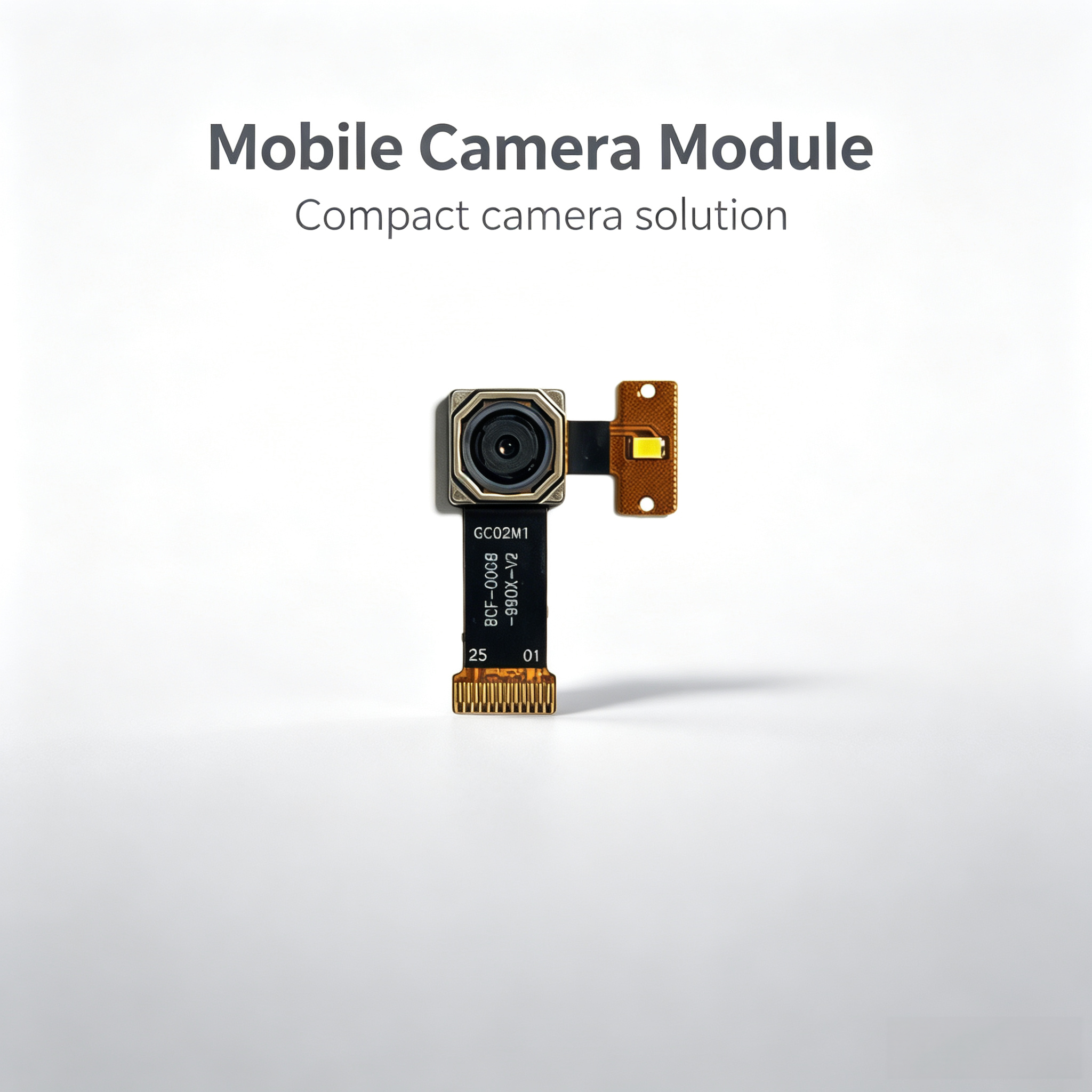
The rapid expansion of Internet of Things devices has created unprecedented demand for intelligent vision capabilities that do not drain power supplies or overwhelm network infrastructure. AI Optical Engine Modules represent a transformative approach to embedded machine vision, enabling IoT devices to process visual data locally with minimal energy consumption. These specialized components integrate optical sensors, processing units, and AI acceleration into compact, power-efficient designs that fundamentally change how edge devices interpret and respond to visual environments. For organizations deploying distributed IoT networks, understanding AI Optical Engine Modules has become essential to making informed technology decisions.

Low-power AI Optical Engine Modules address a critical challenge in modern IoT deployments: performing sophisticated image recognition and analysis without the traditional costs of cloud connectivity, latency, and continuous power draw. By embedding neural processing capabilities directly into the optical hardware, these modules enable real-time decision-making at the point of data collection. This architecture eliminates the need to transmit raw video streams to remote servers, reducing bandwidth consumption, improving response times, and enhancing privacy by keeping sensitive visual data local. The efficiency gains translate directly to longer device operational life and reduced infrastructure complexity for IoT system designers.
Core Architecture and Power Efficiency Design
Integrated Sensor and Processing Integration
AI Optical Engine Modules consolidate multiple functional layers into a single integrated unit, which is fundamentally different from traditional camera modules paired with external processors. The optical sensor, image signal processor, and AI accelerator operate within a unified power domain, eliminating redundant data transfers and unnecessary intermediate stages. This integration significantly reduces the overall power consumption profile compared to discrete component approaches. When AI Optical Engine Modules combine these elements, designers can optimize power delivery, thermal management, and signal routing for maximum efficiency without sacrificing performance or image quality.
Hardware Acceleration for Neural Inference
The neural processing cores embedded within AI Optical Engine Modules use specialized architectures designed for efficient inference rather than training, which requires substantially less computational overhead. These processors implement quantization, pruning, and other optimization techniques that reduce memory bandwidth and power draw during model execution. By processing video frames within the module itself, AI Optical Engine Modules eliminate the energy cost of transmitting unprocessed pixel data through system buses or network interfaces. The hardware acceleration approach allows complex visual recognition tasks—object detection, face identification, anomaly detection—to execute continuously on battery or ultra-low-power supply rails without draining system resources.
Deployment Scenarios and Practical Applications
Autonomous Monitoring and Surveillance Systems
Surveillance networks spanning large areas require thousands of camera nodes, making power efficiency a primary cost driver for both equipment and operational expenses. AI Optical Engine Modules deployed in outdoor monitoring stations can analyze video locally, detecting intrusions, motion patterns, or behavioral anomalies without uploading continuous streams to central servers. This capability enables remote installations to operate for months on battery or solar charging without grid connectivity. Industrial facilities, border monitoring stations, and distributed sensor networks all benefit from the combination of local intelligence and power efficiency that AI Optical Engine Modules provide, reducing both infrastructure requirements and operational burden.
Smart IoT Devices and Edge Robotics
Consumer IoT devices such as smart home cameras, autonomous robots, and wearable vision systems face strict power budgets that make traditional cloud-based vision processing impractical. AI Optical Engine Modules enable these devices to deliver intelligent features—person detection, gesture recognition, environmental awareness—while maintaining days or weeks of operation between charges. Robotic systems using AI Optical Engine Modules can make real-time navigation and manipulation decisions without the latency and power overhead of cloud communication. The compact form factor and integrated design of AI Optical Engine Modules make them ideal for space-constrained applications where traditional camera and processor combinations cannot fit.
Integration and Development Considerations
Firmware Support and Software Ecosystem
Effective deployment of AI Optical Engine Modules depends on well-documented firmware, development tools, and software libraries that abstract the underlying hardware complexity. Leading implementations of AI Optical Engine Modules provide comprehensive SDKs, pre-trained model libraries, and integration examples that accelerate time-to-market for device manufacturers. The ability to customize neural models, adjust image processing parameters, and manage power states through standardized APIs makes AI Optical Engine Modules accessible to engineering teams without deep expertise in hardware acceleration or model optimization. Manufacturers should verify that available documentation covers thermal management, latency specifications, and worst-case power consumption across different operating modes.
Thermal and Mechanical Integration
While AI Optical Engine Modules are inherently more power-efficient than discrete alternatives, sustained neural processing generates heat that must be properly managed to maintain reliability and performance. The module enclosure, mounting substrate, and surrounding system design all influence how effectively heat dissipates from the processing cores. Proper mechanical integration ensures that optical clarity is not compromised by thermal stress or misalignment over extended operating periods. System designers must consider the interaction between AI Optical Engine Modules and other power-consuming components, ensuring that shared power supplies, thermal paths, and cooling solutions are sized to handle peak simultaneous loads without creating bottlenecks or reliability risks.
Performance Benchmarks and Model Selection
Inference Speed and Accuracy Trade-offs
Different AI Optical Engine Modules support varying neural architectures and model sizes, creating a spectrum of performance and accuracy options for different applications. Lightweight models running on AI Optical Engine Modules may achieve frame rates exceeding 30 frames per second while consuming just a few milliwatts, whereas more complex models might deliver higher accuracy at lower frame rates or with proportionally higher power consumption. The selection of AI Optical Engine Modules must account for the specific requirements of the target application—whether real-time responsiveness, detection accuracy, or power efficiency takes priority. Reference implementations and performance datasheets help system designers understand the latency-accuracy-power trade-off landscape and select appropriate models for their use cases.
Model Quantization and Compression Techniques
Advanced implementations of AI Optical Engine Modules employ quantization, model compression, and knowledge distillation to fit sophisticated neural networks into resource-constrained environments. These techniques reduce the memory footprint and computational load of AI models without proportionally degrading detection accuracy or recognition performance. AI Optical Engine Modules equipped with support for quantized models enable developers to deploy state-of-the-art computer vision algorithms on devices that would otherwise be limited to much simpler approaches. The ability to efficiently run compressed models directly inside AI Optical Engine Modules fundamentally changes the feasibility of deploying advanced vision intelligence across large-scale IoT networks.
FAQ
What is the typical power consumption range for AI Optical Engine Modules in active operation?
Most AI Optical Engine Modules consume between 100 milliwatts and 2 watts during continuous video processing with neural inference active, depending on resolution, frame rate, and model complexity. Sleep and idle modes consume significantly less, often under 10 milliwatts, enabling battery-powered devices to extend operational life through intelligent power state switching. The specific power profile depends on the optical sensor resolution, the computational complexity of the deployed neural model, and the intensity of image preprocessing and post-processing operations. Comparing power specifications across different AI Optical Engine Modules requires attention to measurement conditions—whether power figures include sensor operation, neural processing, or both simultaneously.
Can AI Optical Engine Modules support custom neural models, or are they limited to pre-trained models only?
Leading AI Optical Engine Modules provide tools and documentation that allow developers to convert custom-trained neural models into optimized formats compatible with the hardware acceleration capabilities. The process typically involves quantization, kernel optimization, and validation against the target module to ensure accurate inference results. AI Optical Engine Modules from major providers include model conversion frameworks and testing environments that help engineers validate custom models before deployment to production devices. However, not all custom architectures are equally compatible—models designed with efficiency in mind and compatible layer types convert more effectively than overly complex or unsupported architectures.
How do AI Optical Engine Modules compare to sending video to cloud servers for processing?
Edge processing with AI Optical Engine Modules eliminates cloud latency, reduces network bandwidth consumption, protects data privacy, and removes dependency on continuous connectivity—advantages that cloud processing cannot match for bandwidth-constrained or latency-sensitive applications. However, cloud processing enables updates to detection algorithms without device firmware changes and can aggregate insights across large fleets of cameras. The optimal approach often combines both: AI Optical Engine Modules handle real-time local decisions and filtering, while selected results or anomalies upload to cloud systems for long-term analysis, learning, and system-wide intelligence. Cost-benefit analysis should account for network infrastructure, cloud service fees, and the specific latency and privacy requirements of each deployment scenario.