
 EN



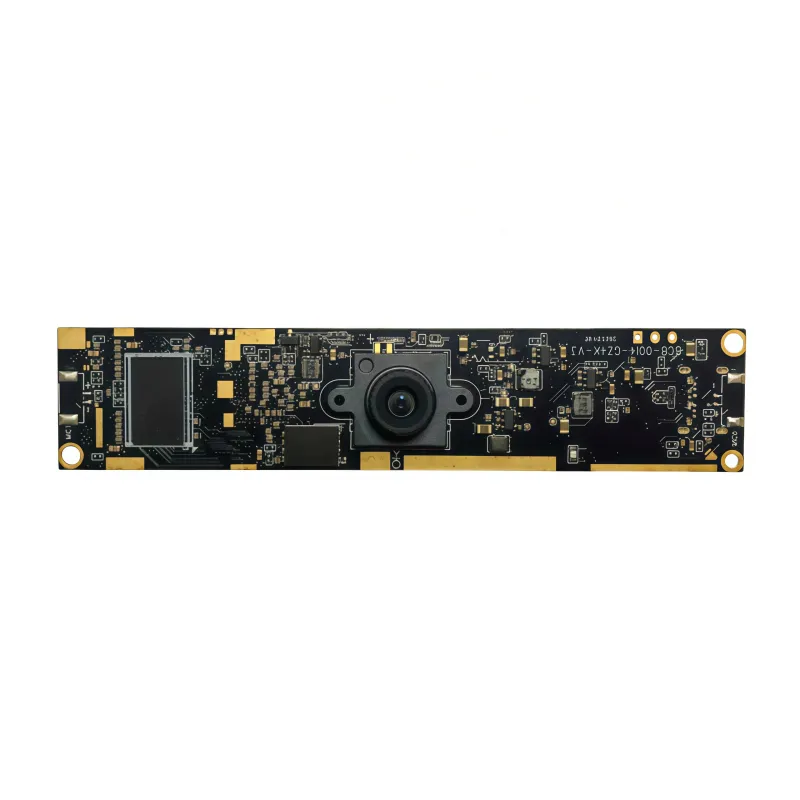
The evolution of vision industry products represents one of the most transformative journeys in modern technology. From early analog imaging systems to today's sophisticated digital ecosystems, vision industry products have fundamentally reshaped how businesses capture, process, and leverage visual data. Understanding the key milestones and impacts that have shaped vision industry products provides valuable context for decision-makers and technology professionals seeking to align their operations with current market capabilities and future trajectories.
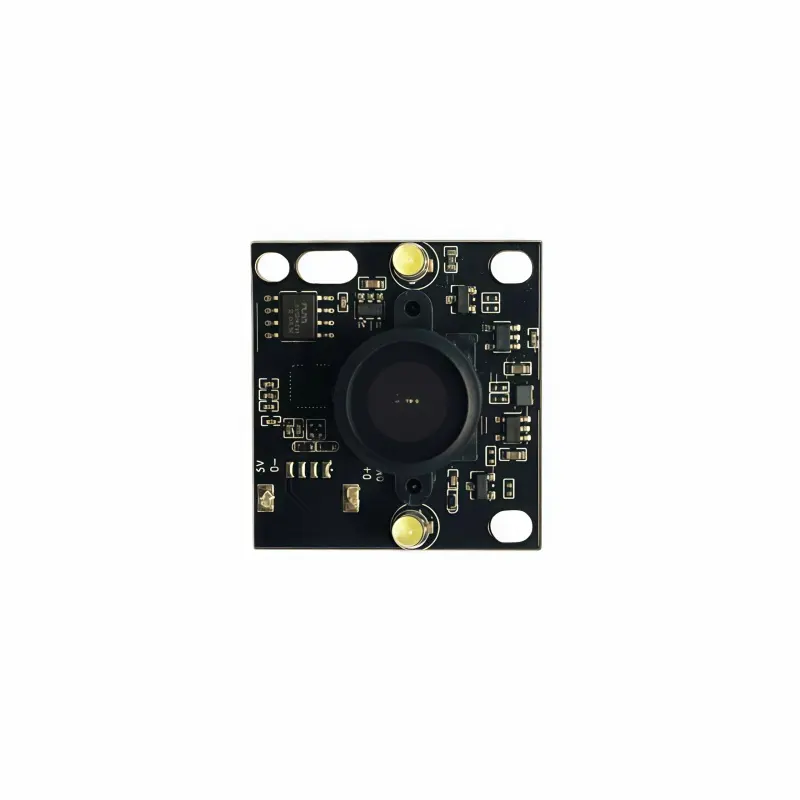
Today's vision industry products operate at unprecedented levels of resolution, speed, and reliability. The convergence of advanced semiconductor technology, computational imaging, and artificial intelligence has created a new class of vision industry products that deliver capabilities once thought impossible. These developments have cascading effects across manufacturing, automotive, healthcare, and logistics sectors, fundamentally changing operational efficiency and decision-making processes.
The Shift from Analog to Digital Transformation
Early Milestones in Vision Industry Products Evolution
The transition from film-based and analog imaging to digital capture marked a watershed moment for vision industry products. In the 1990s and early 2000s, the first generation of digital vision industry products introduced sensors that could capture images electronically, eliminating the need for chemical processing and enabling real-time analysis. This milestone fundamentally altered the economics and accessibility of visual data collection. Early vision industry products featured relatively low resolution, high power consumption, and limited processing capability, yet they opened entirely new application categories previously impossible with analog systems.
Integration of Microprocessor Technology
The embedding of dedicated processors within vision industry products represented a critical inflection point. Rather than requiring external computing systems to analyze captured images, vision industry products began incorporating onboard processing capabilities. This shift reduced latency, lowered system costs, and enabled autonomous decision-making at the point of image capture. Modern vision industry products now contain multiple layers of processing architecture, from initial sensor-level filtering to advanced machine-learning inference engines that operate directly on captured visual data.
Resolution and Sensor Capability Breakthroughs
Megapixel Advancement and Its Industrial Impact
The progression toward higher-resolution sensors represents one of the most visible milestones in vision industry products development. Early digital vision industry products operated at resolutions measured in hundreds of thousands of pixels. Today's flagship vision industry products routinely exceed 50 megapixels, with specialized applications demanding even higher resolution. This escalation enables detailed inspection of fine surface defects, precise dimensional measurement, and rich data capture from distance. The impact extends beyond mere detail visibility; higher-resolution vision industry products fundamentally improve detection rates for small anomalies critical in quality assurance, defect prevention, and safety-critical applications.
Optical Design and Lens Integration Advances
Parallel to sensor advancement, optical engineering in vision industry products has achieved remarkable sophistication. Multi-element lens designs now standard in vision industry products correct for chromatic aberration, distortion, and field curvature with precision previously requiring external optical systems. Advanced coatings minimize reflections and flare, while computational photography techniques embedded within vision industry products compensate for remaining optical imperfections. These optical breakthroughs mean that vision industry products deliver edge-to-edge sharpness and color accuracy critical for applications from pharmaceutical inspection to automotive quality control.
Speed, Connectivity, and Real-Time Processing
Frame Rate and Latency Milestones
Modern vision industry products operate at frame rates that enable capture of high-speed phenomena once requiring specialized slow-motion cameras. Industrial vision industry products now commonly achieve hundreds of frames per second at full resolution, opening applications in high-speed manufacturing inspection and dynamic process monitoring. Beyond raw frame rate, the latency profile of vision industry products has compressed dramatically. Contemporary vision industry products process images in single-digit milliseconds, enabling real-time feedback loops essential for closed-loop manufacturing systems and autonomous machinery integration.
Protocol Evolution and Interface Standards
The standardization of communication protocols represents an often-overlooked but critical milestone in vision industry products deployment. Earlier vision industry products relied on proprietary interfaces and custom integration pathways. Current vision industry products incorporate standardized protocols including USB 3.1, Gigabit Ethernet, and industrial protocols such as MIPI CSI-2, facilitating rapid system integration and compatibility across platforms. This standardization has dramatically reduced engineering time and system costs, accelerating the adoption of vision industry products across diverse industrial sectors and enabling plug-and-play integration scenarios.
Artificial Intelligence and Autonomous Capability Integration
Machine Learning Acceleration and Edge Intelligence
The integration of artificial intelligence capabilities directly into vision industry products marks perhaps the most significant recent milestone. Where traditional vision industry products required external computing infrastructure for image analysis, contemporary vision industry products incorporate neural processing engines enabling on-device machine learning inference. This architectural evolution means vision industry products can perform sophisticated classification, detection, and anomaly identification tasks without cloud connectivity or external compute dependencies. The implications are profound: reduced latency, enhanced privacy, lower total cost of ownership, and reliability improvement for mission-critical applications.
Adaptive and Self-Optimizing Features
Modern vision industry products increasingly incorporate adaptive algorithms that optimize performance based on operational context. Contemporary vision industry products can automatically adjust exposure, focus, and image processing parameters in response to changing environmental conditions. Some advanced vision industry products learn from historical pattern data to improve detection accuracy over time. These capabilities fundamentally shift vision industry products from static tools to dynamic systems that improve operational performance through continuous learning and environmental adaptation.
FAQ
What drives the continuous advancement of vision industry products?
Vision industry products advance due to converging factors including semiconductor miniaturization enabling higher pixel density, computational power improvements allowing onboard processing, declining costs making higher specifications accessible, and competitive market dynamics pushing manufacturers toward differentiation. Additionally, evolving application demands from industries like autonomous vehicles, precision manufacturing, and healthcare create pull for capabilities that vision industry products must deliver to remain competitive and relevant.
How do vision industry products impact total cost of ownership in manufacturing operations?
Vision industry products reduce total cost through multiple pathways. Improved defect detection prevents costly production errors before they compound. Higher reliability and standardized interfaces reduce system downtime and maintenance costs. Onboard processing eliminates expensive external computing infrastructure. Faster processing enables higher inspection throughput, improving line capacity utilization. When evaluated across system lifecycle, modern vision industry products often justify investment through quality improvement, waste reduction, and operational efficiency gains that far exceed initial capital expenditure.
What role do vision industry products play in Industry 4.0 initiatives?
Vision industry products serve as critical sensory components in Industry 4.0 ecosystems. Advanced vision industry products feed real-time visual data into artificial intelligence systems and cloud platforms, enabling predictive maintenance, quality optimization, and autonomous decision-making. The standardized interfaces now standard in modern vision industry products facilitate integration into IoT networks and manufacturing execution systems. This integration means vision industry products act as active participants in interconnected production environments rather than standalone inspection tools, amplifying their value and impact on overall operational intelligence.