
 EN



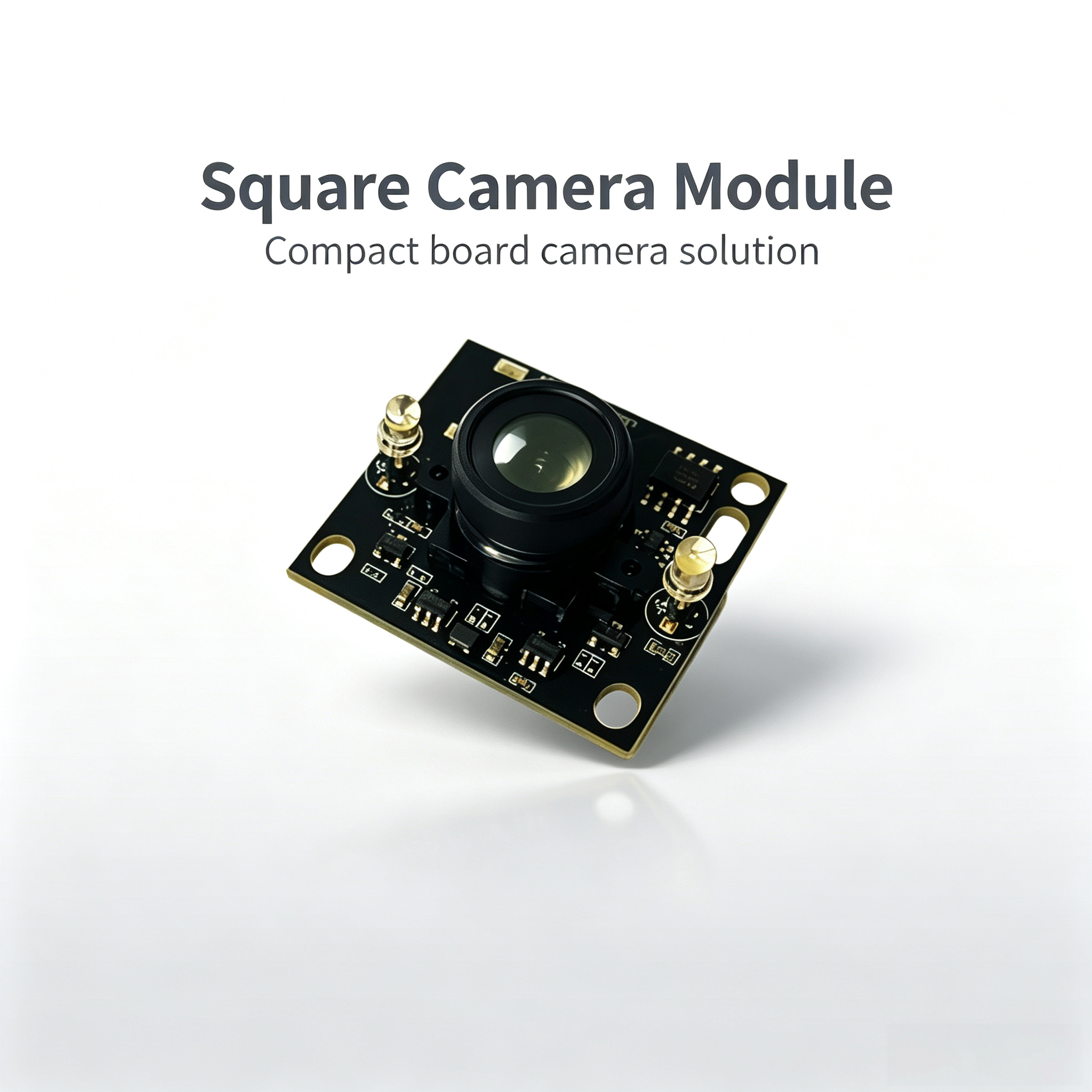
High FPS Modules represent a critical advancement in aerial surveillance and drone technology, delivering the optical performance required for accurate real-time tracking in demanding applications. These specialized optical components enable unmanned aerial vehicles to capture fast-moving targets, monitor dynamic environments, and maintain visual lock during complex flight maneuvers. High FPS Modules excel where standard cameras fall short, providing frame rates and image clarity that transform drone capabilities from passive observation into active, intelligent tracking systems.

The strategic deployment of High FPS Modules in drone platforms addresses a fundamental challenge in visual tracking: capturing sufficient detail across rapid motion without motion blur or frame loss. Whether monitoring infrastructure, tracking wildlife, conducting search-and-rescue operations, or performing industrial inspections, High FPS Modules deliver consistent performance that standard optical components cannot match. Understanding the specific benefits of High FPS Modules helps organizations select the right sensor technology for their tracking requirements and operational goals.
Enhanced Real-Time Performance and Motion Capture
Eliminating Motion Blur in High-Speed Applications
Motion blur remains a primary challenge in drone tracking scenarios where targets move rapidly across the visual frame. High FPS Modules solve this limitation by capturing multiple frames per second, allowing each individual frame to freeze motion with minimal blur artifact. When a drone pursues a moving vehicle, vessel, or aircraft, the higher frame rate inherent to High FPS Modules ensures that critical details remain sharp and identifiable across sequential images. This capability proves essential for law enforcement, defense, and emergency response teams who depend on clear visual evidence during active tracking missions.
Maintaining Visual Lock During Dynamic Flight
Drones equipped with High FPS Modules maintain superior tracking stability even when the aerial platform itself undergoes rapid acceleration, banking, or directional changes. High FPS Modules provide the processing speed necessary for real-time algorithmic tracking, where vision systems must continuously calculate target position, predict trajectory, and adjust drone orientation within millisecond timeframes. This feedback loop demands the temporal resolution that only High FPS Modules can deliver, ensuring that tracking algorithms receive dense temporal information rather than sparse, delayed data from slower sensors.
Optical Quality and Environmental Adaptability
Superior Image Clarity Across Lighting Conditions
High FPS Modules incorporate advanced lens designs and sensor technology optimized for consistent optical performance across variable environmental conditions. Whether operating in bright daylight, dim twilight, or challenging weather scenarios, High FPS Modules maintain image contrast, color accuracy, and focal precision that enable reliable target identification. The optical components within High FPS Modules are engineered to minimize lens distortion, maintain edge sharpness across the full field of view, and preserve detail in both shadowed and highlighted regions of the scene. This optical sophistication ensures that tracking algorithms receive high-quality input data regardless of ambient lighting challenges.
Water Resistance and Durability in Field Operations
Industrial and outdoor drone applications expose optical systems to moisture, salt spray, thermal stress, and environmental contaminants that degrade standard cameras. Premium High FPS Modules feature sealed optical paths, hydrophobic lens coatings, and robust mechanical mounting that withstand coastal operations, rain, and humid environments. High FPS Modules designed for maritime or industrial applications incorporate specific weatherproofing measures that extend operational lifespan and reduce maintenance requirements. This environmental durability makes High FPS Modules economically viable for continuous monitoring missions where equipment replacement costs and downtime must be minimized.
Practical Applications and Strategic Advantages
Infrastructure Inspection and Facility Monitoring
Power utilities, telecommunications companies, and infrastructure operators deploy drones equipped with High FPS Modules to inspect transmission lines, communication towers, and structural elements where precise visual documentation proves critical. High FPS Modules capture detailed imagery that supports condition assessment, damage evaluation, and trend analysis across inspection campaigns. The optical clarity and motion-freeze capability of High FPS Modules enable inspectors to identify subtle corrosion, cracks, or mechanical degradation that might escape notice with standard drone cameras. High FPS Modules transform drone inspection from cursory observation into data-rich documentation that informs maintenance prioritization and capital planning.
Search, Rescue, and Emergency Response
Emergency services, coast guard operations, and search-and-rescue teams depend on drone visual systems that maintain target tracking during high-stress scenarios where seconds determine survival outcomes. High FPS Modules provide the real-time performance and optical clarity necessary to track moving subjects in water, dense vegetation, or complex terrain without losing visual contact. High FPS Modules enable rescue coordinators to maintain situational awareness, navigate responding personnel toward target locations, and document critical evidence during active operations. The combination of high frame rates, environmental resilience, and optical quality makes High FPS Modules an essential technology for time-critical emergency response missions.
Wildlife Monitoring and Environmental Research
Conservation organizations and wildlife researchers employ drones with High FPS Modules to study animal behavior, track migration patterns, and monitor population dynamics with minimal disturbance to natural subjects. High FPS Modules capture behavioral sequences at sufficient temporal resolution to distinguish individual animals, identify species-specific activities, and quantify movement patterns across landscapes. The durability and environmental performance of High FPS Modules support extended field research in remote locations where maintenance support and equipment replacement logistics present significant challenges. High FPS Modules enable researchers to collect visual data that would be impossible to obtain through conventional ground-based observation methods.
FAQ
What specific frame rate does a High FPS Module typically deliver?
High FPS Modules commonly operate at 30, 60, 120 frames per second or higher, depending on sensor design and resolution specifications. The frame rate selection for a particular High FPS Module depends on application requirements, processing bandwidth, and the speed of targets within the tracking scenario. High FPS Modules optimized for fast-moving aerial targets often emphasize frame rate over raw megapixel resolution, prioritizing temporal performance over static image detail. Applications with slower target motion may benefit from High FPS Modules that balance moderate frame rates with higher pixel counts for enhanced spatial clarity.
How do High FPS Modules improve tracking algorithm performance?
Tracking algorithms require dense temporal information to accurately predict target trajectory, calculate velocity, and maintain robust feature matching across sequential frames. High FPS Modules provide the frame-to-frame temporal continuity that allows algorithms to interpolate target position with high confidence, reducing computational load and improving tracking stability. High FPS Modules reduce the temporal gap between observations, making target motion appear smoother and more predictable to algorithmic processors. This temporal fidelity enables simpler, more reliable tracking architectures that consume less processing power while delivering superior performance compared to algorithms forced to work with sparse, delayed input from slower optical sensors.
Are High FPS Modules suitable for indoor drone operations?
High FPS Modules perform exceptionally well in controlled indoor environments where stable lighting, predictable backgrounds, and known flight spaces enable algorithms to maximize tracking precision. High FPS Modules reduce motion blur in indoor scenarios where drones navigate confined spaces and require rapid directional changes to track moving subjects. However, specific High FPS Module designs optimize for either indoor or outdoor performance; indoor-optimized High FPS Modules emphasize low-light sensitivity and compact form factors, while outdoor-rated modules prioritize environmental protection and wide dynamic range. Selection of the appropriate High FPS Module depends on whether primary operations will occur indoors, outdoors, or in mixed-use scenarios requiring compromise specifications.